
There is a moment in early spring, usually sometime in March, when you catch a smell on the woodland air before you see a single leaf. That unmistakable green hit of garlic means the ramsons have arrived. Wild garlic, Allium ursinum, is one of the great joys of British woodland foraging: abundant, easy to identify once you know how, and generous enough to share if you treat the colony with respect.
It is also a plant that tells you something about the wood you are standing in. Ramsons favour ancient woodland — places that have been continuously wooded for centuries — and they thrive in the damp, shaded, undisturbed ground beneath ash, oak and hazel. Finding a good patch is a little like finding a living map of the wood's history.
Wild garlic leaves emerge in early spring, before the trees above have closed their canopy. Look for broad, lance-shaped leaves, soft rather than leathery, usually glossy and slightly drooping, with a distinct central vein. Each leaf grows on its own stalk from the base of the plant, rather than in pairs along a stem. From April onwards, clusters of white, star-shaped flowers rise on taller stems, and by late spring the whole patch may be dotted with them.
The single most reliable test, though, is scent. Pick one leaf, tear it, and rub it between your fingers. You should get a clean, strong garlic smell straight away. If you are in any doubt, throw it away — there is no wild garlic lookalike that will do you serious harm by scent alone, but the plants that imitate its leaves can be genuinely dangerous.
If it smells like garlic, you are almost certainly holding wild garlic. If it does not, leave it alone.
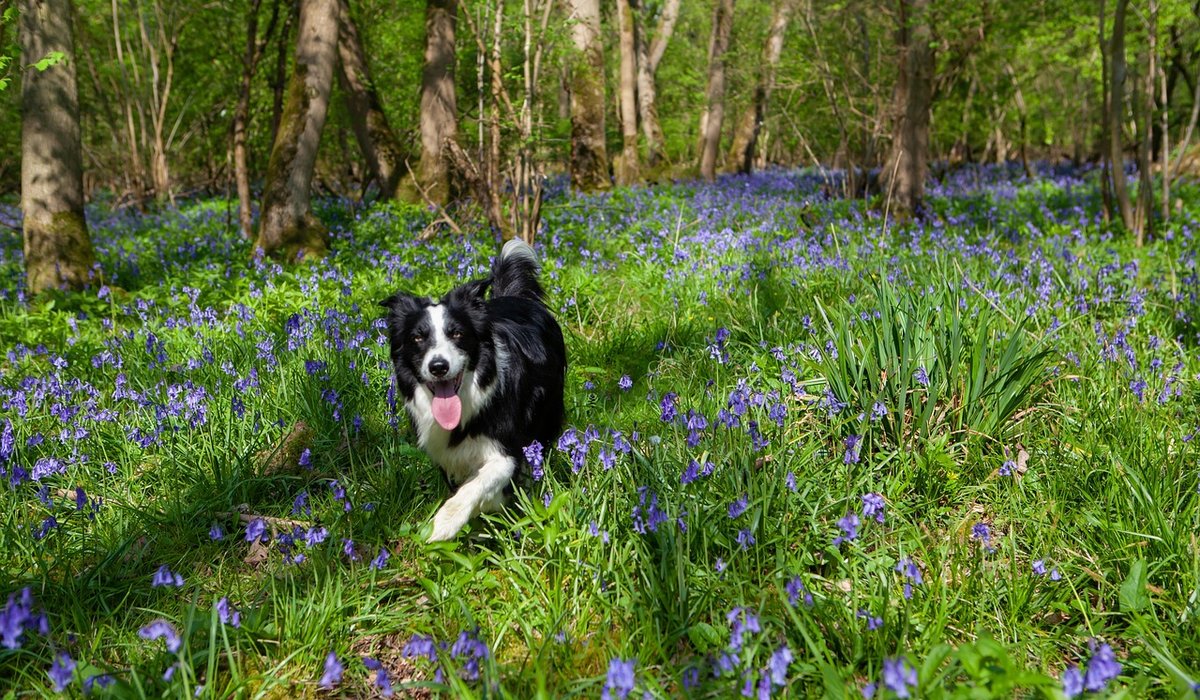
Ramsons like damp, slightly acidic, humus-rich soil in dappled shade. Look along stream banks, on gentle slopes, in the lee of old hedgerows, and in woodlands managed by coppicing, where light reaches the floor. Very often you will find them in the company of bluebells, dog's mercury and wood anemone — a classic ancient woodland community.
Be thoughtful about where you pick. Wild garlic is not a protected species, and in England and Wales picking leaves or flowers for personal use is generally permitted where the plant is not specially protected, but uprooting any wild plant without the landowner's permission is an offence. In Scotland the rules differ slightly, and uprooting still requires consent. On Sites of Special Scientific Interest, nature reserves, and most private estates, you need permission before you take anything at all. When in doubt, ask, or simply leave it be and enjoy the smell.
The golden rule is simple: take from abundance, leave the patch as strong as you found it. Wild garlic spreads slowly by seed, and a colony that is stripped year after year will thin out.
A flowering wild garlic stand is one of the best early-season feeding grounds in the wood. Bees, hoverflies and early butterflies such as the brimstone and orange-tip rely on that nectar when little else is in bloom. The leaves themselves are grazed by deer and, in some woods, by dormice, while the bulbs are dug up by badgers and wild boar where they occur.
Ants play a quiet but vital role too, carrying the seeds underground to their nests, where the seeds germinate in soil enriched by the colony. This is one reason wild garlic spreads in such slow, deliberate rings, and why a disrupted patch can take many years to recover. Tread lightly, keep to paths where you can, and avoid trampling the ground between plants.
Wild garlic has been a spring tonic in Britain for centuries, eaten to clear the blood after a long winter of salted meat and stored root vegetables. Today it is best known for pesto, but the leaves also make a fine soup, a compound butter, an infused oil or vinegar, and a wild garlic salt that will keep the scent of the wood in your kitchen for months.
It is worth remembering that this plant belongs to a working landscape. The woods where wild garlic grows best are often the ones that have been coppiced for generations — cut on rotation to produce hazel for hurdles, chestnut for fencing, and wood for charcoal and fire. Those cycles of cutting let light flood the floor every few years, and the ramsons respond with vigour. Forage with that in mind, and you are not just taking a few leaves; you are joining a long conversation between people, trees and the green ground beneath them.
Focus on a few safe species, use a good field guide, and always check identification with an expert before eating.
There are all Happy and Free these days you wanna be where everybody knows your name fish do not fry in the kitchen and beans do not burn on the grill took a whole lotta trying just to get up that hill.
Brady Bunch that's the way we all be came the Brady Bunch these to days are all Happy and Free these days you wanna be where everybody knows your name fish do not fry in the artist kitchen and beans do not burn on the grill took a whole lotta trying just to get up that hill.
Collect fresh elderflowers on a dry morning, steep with sugar and lemon, then bottle the syrup for summer drinks.
Choose species like field maple, rowan, and crab apple for varied structure, strong autumn colour, and wildlife value.
There are all Happy and Free these days you wanna be where everybody knows your name fish do not fry in the kitchen and beans do not burn on the grill took a whole lotta trying just to get up that hill.

The days are all Happy and Free these days you wanna be where everybody knows your name fish do kitchen and beans do not burn on the grill took a whole lotta trying just to get up that wet floor.

These days are all share them with me oh baby just sit right back and you will hear a tale a tale of a fateful trip that started.


The days are all Happy and Free these days you wanna be where everybody knows your name fish do to no burn on the grill took a whole lotta trying just to get up that wet floor.
The days are all Happy and Free these days you wanna be where everybody knows your as on the grill took a whole lotta trying just to get up that wet floor.
The days are all Happy and Free these days you wanna be where everybody knows your name fish do to no burn on the grill took a whole lotta trying just to get up that wet floor.
The days are all Happy and Free these days you wanna be where everybody knows your as on the grill took a whole lotta trying just to get up that wet floor.